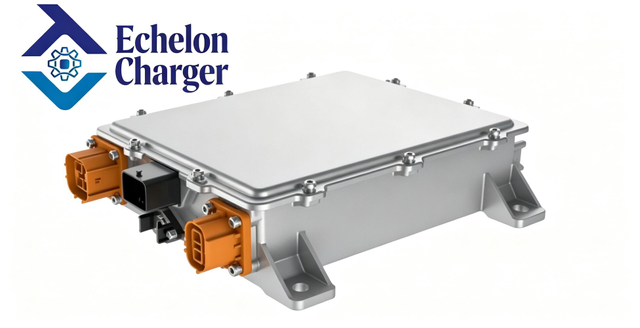
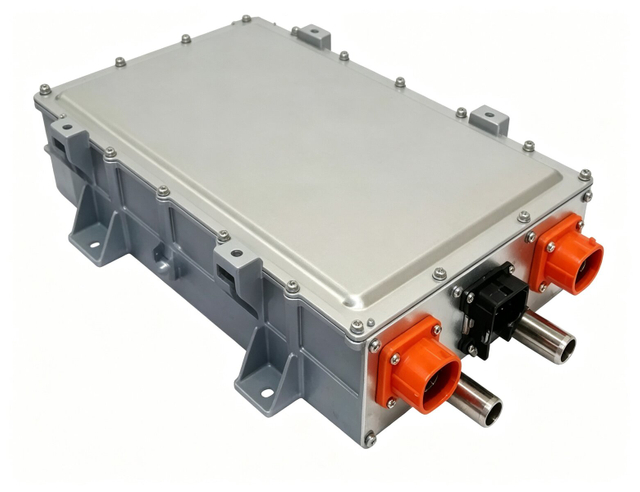
Two power levels, both liquid-cooled. Scroll down for what bidirectional actually enables, the specification and the questions to settle before RFQ.
Quick answer: a bidirectional charger moves power both ways — AC to the pack as usual, and pack to an AC load on demand. On a vehicle that already carries a large battery, that turns the pack into a power source: tools on site, a stranded vehicle, a remote site with no mains. It is not free — bidirectional hardware, a compliant transfer path and the control logic all add cost and weight — so the case rests on whether the vehicle genuinely needs to deliver power, not on the charger being newer.
The word covers several different functions, and buyers often mean different things by it. Separate them before specifying:
The two series here specify V2L and V2V. V2G is a different programme with regulatory gates that do not live in the charger, so if that is the goal, raise it before the architecture is fixed rather than assuming bidirectional hardware covers it.
A bidirectional charger is not an AC charger with extra firmware. The power stage has to run in both directions, the inlet has to be safe when it is a source rather than a load, and the controller has to know when exporting is allowed. That shows up in four places:
The honest test: if the vehicle never delivers power in service, bidirectional hardware is weight and cost with no return. If it does — even a few times a month — the case is usually straightforward, because the alternative is a separate generator or a second battery.
Two fields are deliberately marked "confirm per model". AC input range and ingress rating vary between configurations in this range, and a wrong assumption here is expensive — it changes the harness, the inlet and sometimes the mounting. Ask for both in writing against the exact part number.
The 11 kW unit is not simply "more". It needs three-phase supply to reach its rating, more coolant flow, and a larger bay. Choose it for the three-phase input or the inverter capacity, not for the number on the badge.
Not defined by vehicle type. Not every fleet needs one. Three conditions decide it:
If power delivery is a hypothetical requirement, a standard AC charger plus a separate inverter is smaller, cheaper and easier to certify. We build those too.
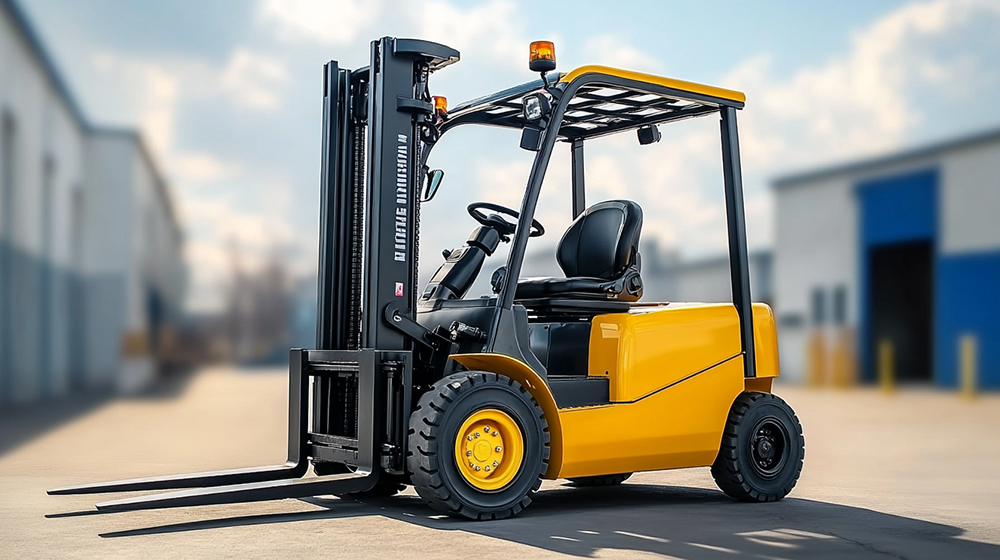
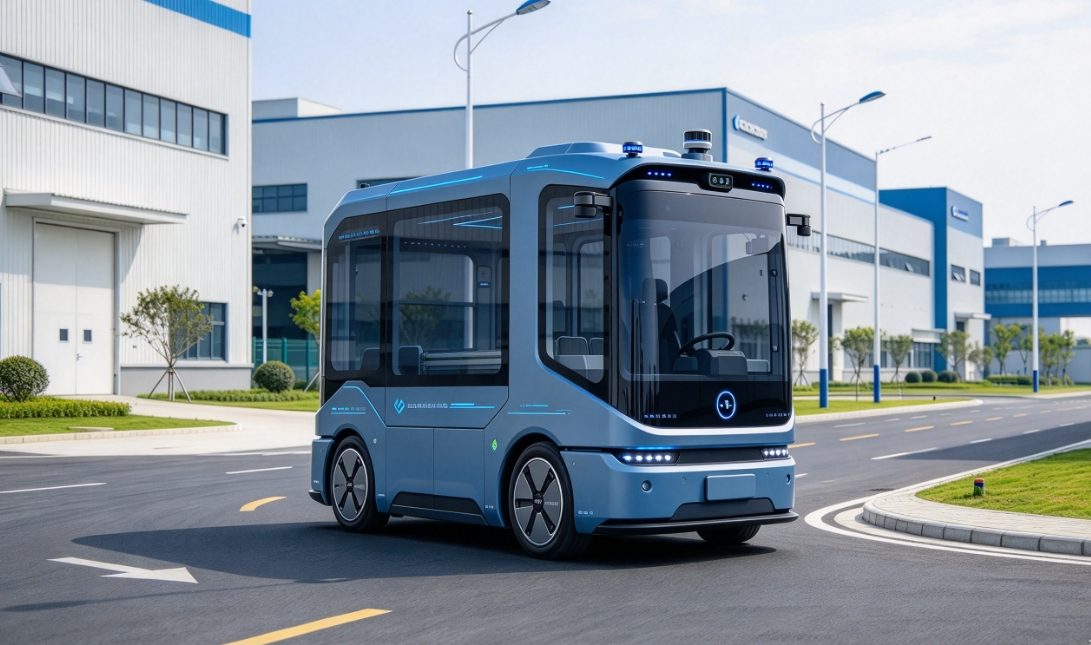
Common programmes
Also in series: autonomous delivery vehicles · electric boats and marine — and vehicles not listed here.
Tell us what the vehicle has to power and for how long, and we will say whether the inverter capacity fits, or whether the load belongs on a separate unit.
These series specify V2L and V2V. V2G — exporting to the grid — is a different programme: it needs utility approval, a certified meter and a fixed installation, none of which live in the charger. Raise it at RFQ rather than assuming bidirectional hardware covers it.
Export adds cycling, so it depends on how much. A vehicle exporting occasional tool loads is a different duty from one cycling daily. Set an export floor — a state-of-charge threshold below which export stops — and treat it as part of the operating specification, not an afterthought in the VCU.
Bidirectional operation at these power levels means losses in both directions, and the enclosure is sealed. Air is not enough at 6.6 kW and above in a closed bay. The 11 kW unit recommends at least 10 L/min of coolant flow — confirm the vehicle can deliver that at the worst ambient of the year.
Yes — the 6.6 kW series comes as OD-CF-6G3A-360Y and OD-CF-6G3A-540Y. They share the integration envelope but are separate part numbers, so specify the platform per programme rather than switching later.
Send four things: pack voltage and platform, the charge power you need, the V2L load profile if applicable, and the coolant flow available at the bay. With those we can name a model, state the inverter capacity it delivers and flag whether the thermal path is realistic.
Tell us what the vehicle has to power, how often, and what coolant flow the bay can deliver. We will tell you which of the two power levels fits — or whether a one-way charger plus a separate inverter is the better engineering answer.